
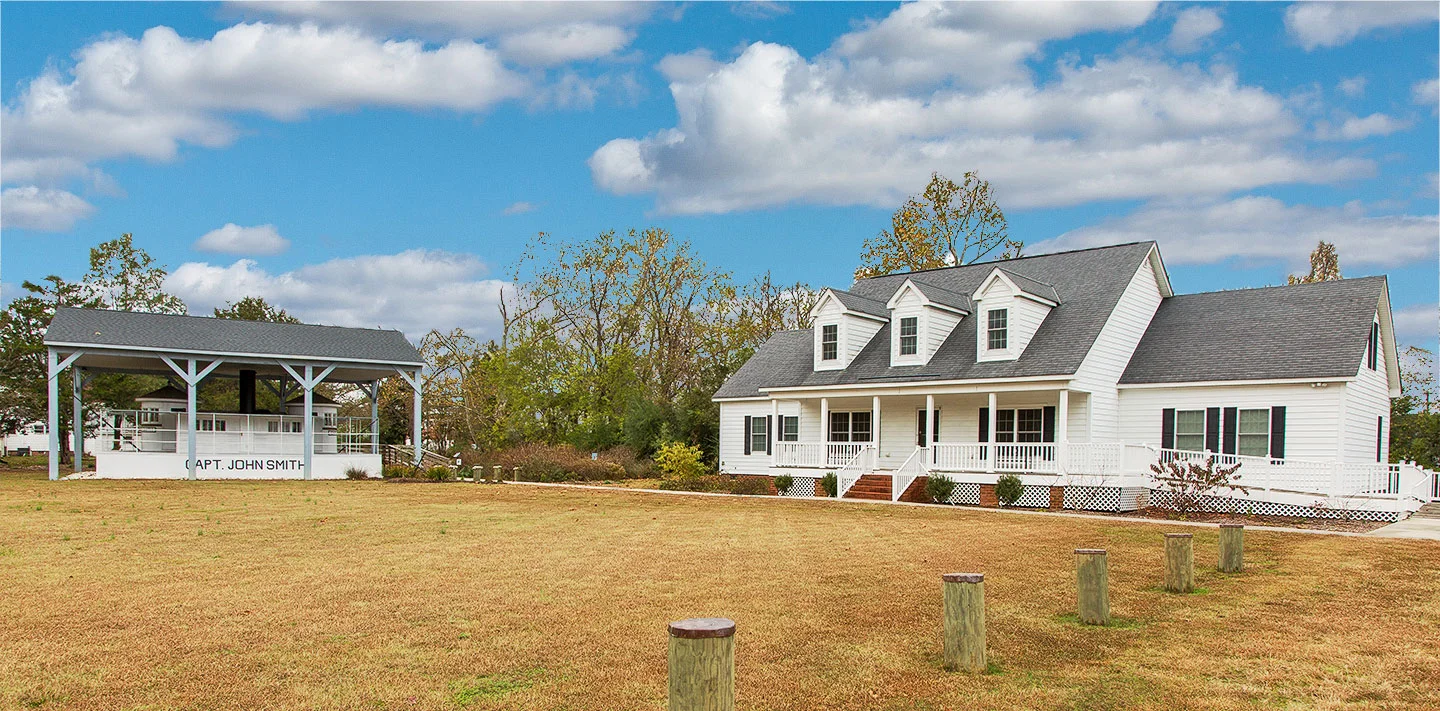
PHOTO – Surry County, VA History Museum
Governor Glenn Youngkin last year announced the 35 preservation projects from across the Commonwealth that were awarded grant funding through the Virginia 250 Preservation Fund.
In 2024, Governor Youngkin and the General Assembly established the Virginia 250 Preservation Fund in the Commonwealth’s 2024-2026 Biennial Budget to support capital improvement projects at historic sites and museums that anticipate a significant increase in visitation in 2026, the year of the 250th anniversary of the Declaration of Independence, also known as the nation’s Semiquincentennial. The Department of Historic Resources (DHR) administers the funds from the grant program.
Here’s a list of the Preservation Fund recipients.
“As the United States of America prepares to celebrate its 250th birthday in 2026, there is no better time to show the world the essential role that Virginia has played in our Nation’s founding,” said Governor Glenn Youngkin. “These investments in historic properties will allow them to showcase their significant cultural value, preserving them for future generations.”
Following a preapplication screening process in the summer of 2024, DHR invited 218 out of 227 initial preapplicants to submit a full application for the program. DHR received 166 completed full applications. A DHR internal review panel, with input from representatives in the Office of the Commonwealth’s Secretary of Natural and Historic Resources and the Governor’s Office, selected 35 projects for a total of $19,993,983.26 in funding.
As part of the grant program’s selection process, priority was given to projects featuring properties listed in the Virginia Landmarks Register (VLR) and/or the National Register of Historic Places (NRHP), properties designated as a National Historic Landmark (NHL), and properties determined eligible for any such listing by DHR. The projects that received awards include efforts to stabilize and repair historic buildings, which will ensure that visitors from Virginia and beyond can continue to benefit from these important educational resources for years to come. Enhancements to accessibility features, which will help sites serve more visitors, are included in nearly half of the projects. After the funded projects are completed, a number of the sites will serve as venues for events and multipurpose gathering, thus contributing to the economic and social vitality of their respective communities.