
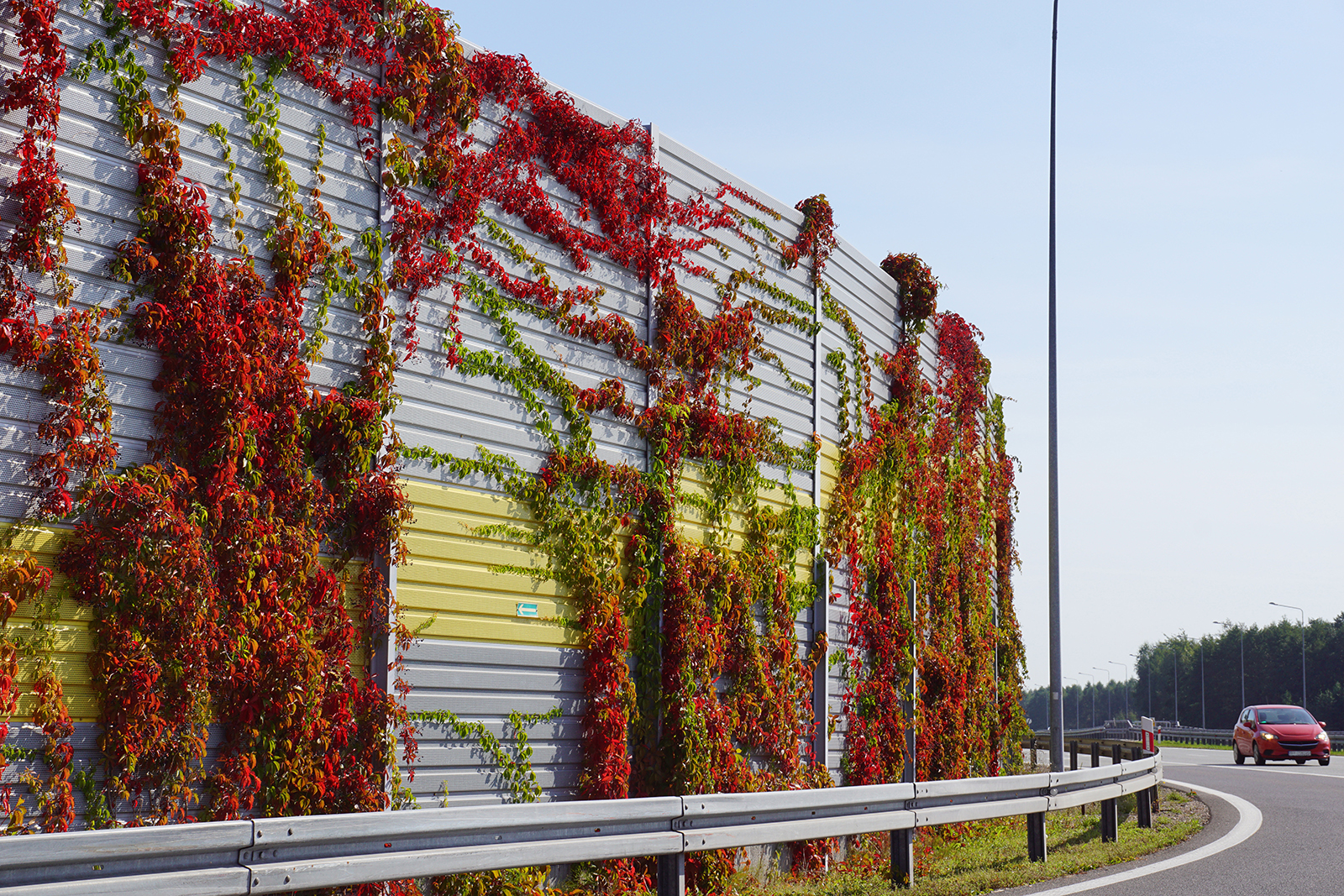
County leaders across Virginia are being asked to weigh in on an emerging policy discussion at the state level that could affect how localities engage with the Virginia Department of Transportation (VDOT) on highway traffic noise issues in their communities.
Last year, the General Assembly considered HB 1615 (Feggans), which would have established new requirements around highway noise analysis and abatement. HB 1615 would have required VDOT to commence a noise analysis within one year of receiving a valid petition and would have further required the department to complete noise analyses for any retrofit noise abatement project it undertakes or considers with or without a petition or a dedicated funding source already identified.
The Infrastructure and Funding Subcommittee of the House Committee on Transportation voted unanimously to lay the bill on the table with the recommendation that the Department of Transportation study the issues identified in the legislation. The work group, of which VACo is a participant, is directed to submit a report of its findings and recommendation to the Chair of the House Committee on Transportation and Delegate Feggans by September 1, 2026.
What the Work Group Is Examining
The work group met for the first time on April 28, 2026. VDOT provided an overview of federal highway noise rules and the key issues the group must consider.
A central point of discussion is how federal law limits when noise studies are required. VDOT must study traffic noise only for “Type I” projects which include major changes like new highways, added lanes, or significant roadway alterations. For existing highways without planned upgrades, there’s no requirement to study noise or build barriers.
“Type II” projects would allow noise barriers on existing roads, but VDOT does not participate in this program. Creating one would be complex, requiring federal approval, funding, and strict eligibility rules. VDOT also noted that even if a Type II program was created and maintained, many communities would likely not qualify.
As a result, most community-requested (petition-based) noise studies would fall under “Type III” projects. These include minor work like paving or installing guardrails. These projects typically are not eligible for federal funding, meaning neither studies nor barriers would likely be funded.
How VDOT Currently Evaluates Noise Abatement
When VDOT does conduct a noise analysis on a Type I project, it applies a three-part test to determine whether noise abatement is appropriate.
- VDOT determines whether abatement is warranted
- meaning that predicted traffic noise levels approach or exceed federal noise abatement criteria, or that a substantial increase of 10 dB(A) or more above existing noise levels has occurred. A 10 dB(A) increase is roughly equivalent to a perceived doubling of loudness.
- VDOT evaluates whether abatement is feasible from both an engineering and acoustical standpoint
- VDOT requires at least 50% of impacted receptors would experience a meaningful noise reduction of 5 dB(A) or more and that it is possible to design and construct the noise abatement measure.
- VDOT assesses whether abatement is reasonable
- Weighing the barrier’s noise reduction design goal, cost-effectiveness as measured by square footage of barrier per benefited receptor, and whether at least 50% of affected residents support construction.
These same standards would apply to any petition-based noise study. It is worth noting that existing state law already provides localities a pathway to act independently on noise concerns. Under §33.2-276, the governing body of any locality may, at its own expense, evaluate noise from highways it designates for analysis, and VDOT is required to accept and rely upon that evaluation provided it complies with applicable federal law, regulations, and VDOT’s own policies and guidelines.
The Cost Question
Cost is one of the most significant practical challenges being discussed by the work group. VDOT estimates noise barrier materials and installation at approximately $70 per square foot. When additional project costs are factored in, total costs can rise sharply. According to VDOT, cost estimates for a hypothetical barrier approximately 1,840 feet long and 15 feet high serving an estimated 37 benefited receptors has a total estimated project cost of nearly $4.7 million. Materials and installation alone for that barrier would cost approximately $1.9 million. This estimate does not include maintenance for the noise barrier which would have to be maintained in perpetuity. A full breakdown of the cost estimate can be found on slide 18 of the presentation given by VDOT.
Under current policy, third-party funding contributions on Type I projects are limited to aesthetic enhancements like decorative wall treatments or plantings and cannot be used to offset barrier construction costs when the reasonableness cost threshold has not been met. Identifying workable funding mechanisms for petition-initiated projects, which would fall outside the Type I framework, remains an open question for the work group.
Key Questions Under Discussion
The work group is working through a range of procedural and policy questions that have significant implications for how localities might interact with any future petition process. Key questions include:
- What should constitute a “valid petition?”
- What would be included in a noise analysis and who would complete it?
- Who would fund the noise analysis and any construction of noise barriers?
- Who would maintain the noise barrier in perpetuity?
The work group plans to meet again in late May. A draft final report is expected to be circulated to work group members by July 10 with a final report back to the group by August 14, and submission to the General Assembly by August 31.
Your Input Is Welcome
The issues being examined by the HB1615 Work Group are ones that county governments across Virginia could have a direct stake in. If your locality has experience with highway noise concerns, has previously sought noise abatement along a state highway corridor, or has perspectives on how a petition process should be structured and funded, that input could meaningfully inform the work group’s recommendations. County leaders with comments or perspectives to share are encouraged to reach out to VACo prior to the work group’s next meeting. Input received will be shared with the work group as it finalizes its report to the General Assembly.
VACo Contact: James Hutzler