
By Dean Lynch, CAE
Executive Director
Virginia Association of Counties
The following commentary appeared in the Richmond Times-Dispatch on January 2.
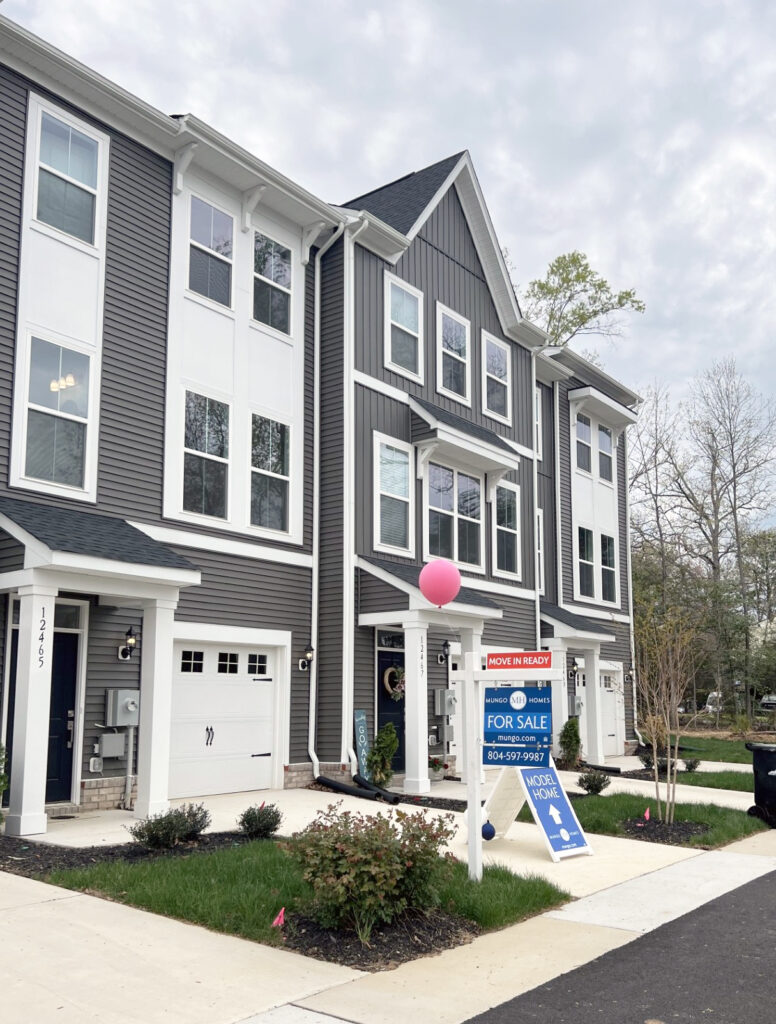
PHOTO: Discovery Ridge, a community of townhomes in Henrico County, features homes that are three stories, with three bedrooms, two full baths, two half baths and a one-car garage
Housing affordability is one of the most pressing challenges facing Virginia today. From our largest metropolitan regions to our most rural communities, Virginians struggle to find homes they can afford – a home near where they work, where they can raise families, and where they can contribute to their local economies. The Virginia Association of Counties (VACo) recognizes both the urgency of this challenge and the opportunity it presents. We strongly support affordable housing initiatives, and we look forward to partnering with Governor-Elect Abigail Spanberger and her administration, members of the General Assembly, and the housing industry to develop and support housing incentives that are rooted in local decision-making.
Across the Commonwealth, counties are already demonstrating that locally driven solutions work.
As Smyth County Administrator Shawn Utt will tell you, housing is not an abstract policy discussion—it is a daily reality. For more than a decade, Smyth County saw fewer than five speculative homes built between 2008 and 2023. Faced with that reality, the Smyth County Board of Supervisors chose action over inertia. On April 13, 2023, they launched the innovative Smyth Grow program, dedicating $3 million to create a 0% interest, revolving loan fund in partnership with the Mount Rogers Planning District Commission.
Just a few years later, Smyth Grow is approaching 100 speculative homes—100 families positively impacted because local leaders understood their market, their barriers, and their opportunities.
“This program has been an amazing catalyst for reinvestment not just by developers but by our own citizens as well,” Utt said. “The housing market growth is well above the 80-plus homes we’ve developed, and the desire to invest in yourself and your community is contagious.”
These successes are not isolated.
Each year following the General Assembly session, VACo travels the Commonwealth to hear directly from county officials about their challenges and priorities. This past spring and summer, VACo held Regional Meetings in Brunswick, Sussex, Henrico, Pittsylvania, King George, Dickenson, Bland, Prince William, Gloucester, and Shenandoah counties. Officials from across Virginia attended alongside state legislators, and in every single meeting, housing supply and affordability rose to the top.
From Accomack County to York County, we heard successes and frustrations, innovative ideas and structural constraints. But one thing was unmistakable: county officials are deeply invested in addressing housing needs—and they are already doing the work.
Consider Henrico County. Beginning July 1, 2024, and using $60 million in previously unbudgeted data center revenues, Henrico established an affordable housing trust fund. Within months, in partnership with a private homebuilder and the Maggie Walker Land Trust, the county announced two townhouse developments totaling 30 units for first-time homebuyers meeting income requirements.
Henrico County Board of Supervisors Chair Tyrone E. Nelson put it plainly: “We’ll soon have 30 new townhomes that will be affordable and available to qualifying first-time homebuyers, like hardworking nurses and others in health care, restaurant staff, and office employees.” County officials expect the program to eventually support 100 to 150 homes per year as awareness and participation grow.
These examples reinforce a critical truth: local decision-making is the most effective strategy for addressing housing challenges. A by-right approach or top-down mandate is neither necessary nor appropriate for a Commonwealth as diverse as Virginia.
VACo represents all 95 counties—each with distinct geographies, economies, infrastructure, budgets, and housing markets. A one-size-fits-all legislative approach risks solving one county’s problem at the expense of another’s.
Floyd County illustrates this point. Housing challenges in Southwest Virginia look very different from those in Northern Virginia.
“Here in this end of the state, in these mountains, it’s very difficult to build roads,” said Floyd County Vice Chairman and VACo First Vice President Jerry Boothe. “We are looking to put in new homes geared toward the local workforce—teachers, first responders, industry workers—but it costs about $1 million per mile for roads. That’s our biggest cost.”
In response, Floyd County adopted a new Land Division Ordinance to allow small subdivisions on private roads built to basic standards, recognizing that VDOT-level road requirements can make modest housing developments financially impossible in mountainous terrain.
Floyd County also launched a housing rehabilitation program that has already renovated or rebuilt 14 homes for 29 residents—primarily seniors and individuals with disabilities, along with several families with young children. Nine homes received critical repairs, while five were completely rebuilt. Due to overwhelming demand and proven success, the county was recently awarded $1.2 million in additional grant funding to rehabilitate eight more homes, including four complete rebuilds.
In Prince William County, elected officials adopted the first-ever Affordable Dwelling Unit (AfDU) Ordinance, which is a significant zoning text amendment and marks a pivotal step in expanding access to housing for low- and moderate-income families.
The ordinance establishes a voluntary incentive program that offers density bonuses to developers who include affordable housing in their projects and creates the Prince William County Housing Trust Fund to provide gap financing for eligible affordable housing projects. The Board of Supervisors also committed approximately $5 million for the next 5 years for total of $31 million to finance eligible projects.
“This is a huge step forward for Prince William County,” said Board of County Supervisors Chair At-Large Deshundra Jefferson. “Everyone deserves a safe and affordable place to call home, including Prince William’s essential workers. This ordinance is not just about buildings – it’s about people, families, and the future of our community. We are creating real, long-term solutions that will help address the growing need for affordable housing.”
And Henry County recently helped some of its working families with the construction of four new homes, which are built on former drug-blighted parcels. The county is planning on completing nine more new homes in future years.
These are not theoretical policy ideas. They are practical, community-driven solutions shaped by people who know their communities best.
VACo believes strongly that addressing housing affordability will require collaboration—between local governments, the state, the private sector, and nonprofit partners. We are encouraged by the opportunity to work with Governor-Elect Spanberger and her administration, the General Assembly, and housing stakeholders to develop incentives that empower counties rather than constrain them.
Solutions to housing challenges are not always found in legislative mandates or uniform statutes. More often, they are built through trust, flexibility, and partnership—by local leaders using state support to meet local needs.
That is why VACo supports affordable housing initiatives, collaboration at every level, and remains steadfast in protecting local decision-making. When communities are empowered to lead, Virginians are the ones who benefit.